

Suzuki Motor Corporation Says SOCS: Engine cooling is one of those topics most riders ignore — until summer traffic hits, the fan noise rises, and engine heat starts warming your legs at every signal. In India’s stop-go riding conditions, cooling technology plays a much bigger role than many realise. Suzuki has once again highlighted the importance of its Suzuki Oil Cooling System (SOCS), explaining why it believes oil-cooled engines justify the premium over traditional air-cooled setups.
While air-cooled motorcycles remain popular due to their simplicity and affordability, Suzuki draws a clear distinction between the two technologies — especially when used in Indian conditions marked by heavy traffic, high ambient temperatures, and long idling times.
How Air-Cooled Engines Work — And Where They Struggle
Air-cooled engines rely on airflow passing over metal cooling fins around the cylinder and head. As the motorcycle moves forward, air flows across these fins, carrying heat away from the engine.
The system is simple, lightweight, and cost-effective. There are no radiators, coolant lines, or water pumps. This simplicity makes air-cooled bikes easier to manufacture and maintain. However, the system has one fundamental limitation: it depends heavily on road speed.
When riding at a steady pace on open roads, airflow is sufficient to keep temperatures under control. But in heavy traffic — particularly during Indian summers — airflow reduces dramatically. With the bike crawling at low speeds or idling at traffic signals, cooling efficiency drops. As a result:
- Engine temperatures rise quickly
- Performance consistency can suffer
- Fuel efficiency may drop
- Engine oil degrades faster
- Internal wear can increase over time
Suzuki argues that this is where SOCS offers a clear advantage.
What Is Suzuki Oil Cooling System (SOCS)?
SOCS acts as an intermediate solution between traditional air cooling and full liquid cooling. Instead of relying solely on airflow over fins, SOCS uses engine oil to perform two critical roles:
- Lubrication
- Active heat removal
In an SOCS-equipped engine, oil is circulated strategically around high-temperature zones such as the cylinder head and piston crown. The oil absorbs heat from these areas and then passes through an external oil cooler before circulating back into the engine.
This continuous movement of oil allows the system to regulate heat more effectively — even when the motorcycle is idling. Unlike air cooling, SOCS does not rely entirely on forward motion.
Temperature Difference: The 15–20°C Advantage
Suzuki claims that in peak summer traffic conditions, oil temperatures in air-cooled engines can exceed 140°C. High oil temperatures can reduce lubrication efficiency and accelerate oil breakdown.
In contrast, SOCS-equipped engines are said to run 15–20°C cooler on average under similar conditions. That margin may seem small on paper, but in real-world operation, it can significantly improve:
- Engine smoothness
- Throttle response consistency
- Oil life
- Component durability
Lower operating temperatures reduce the likelihood of localised overheating, especially around hot spots such as the piston crown and cylinder head — areas most vulnerable to stress and long-term damage.
Fuel Efficiency Gains In Urban Riding
Suzuki also links improved thermal management to better fuel efficiency. According to the company, SOCS-equipped motorcycles can deliver 2–4 km/l better mileage in city riding compared to similar air-cooled engines.
This improvement comes from:
- More stable combustion temperatures
- Reduced heat-related performance losses
- Consistent throttle response
In congested Indian cities where average speeds are low and stop-go riding dominates, such efficiency gains can translate into noticeable fuel savings over time.
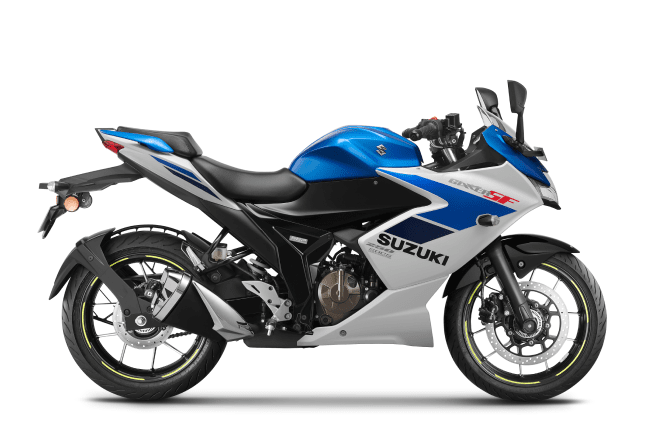
Longevity: A Practical Ownership Benefit
Beyond performance and fuel efficiency, durability is another factor Suzuki highlights.
Based on service-centre observations, SOCS-equipped engines often reach 40,000–50,000 km before requiring major mechanical intervention. Comparable air-cooled engines operating in similar harsh conditions may need significant work between 30,000–35,000 km.
Indian riding environments add extra strain due to:
- High ambient temperatures
- Long idle times
- Frequent gear changes
- Variable fuel quality
Under these conditions, better heat control directly contributes to longer engine life and more predictable performance over the years.
For riders who keep their motorcycles for extended periods — often five to ten years — this added durability can offset the initial price premium.
Cost vs Benefit: Is The Premium Justified?
Air-cooled motorcycles continue to attract buyers because they are:
- Cheaper to purchase
- Mechanically simpler
- Easier to repair
- Retro in aesthetic appeal
There is no denying their charm and practicality for certain use cases.
However, Suzuki argues that when considering total ownership cost, SOCS offers long-term value. The slightly higher upfront cost may be balanced by:
- Improved fuel economy
- Reduced chances of major engine repairs
- Longer oil life
- Better performance stability in summer
In a market like India, where motorcycles serve as daily commuters rather than weekend machines, durability and consistency matter more than outright performance figures.
Also read: BYD to Launch Sealion 06 PHEV with 175 kW Motor, 220 km EV Range, and Optional LiDAR in 2026
Indian Riding Reality: Why Cooling Matters More Here
India’s average riding speeds are lower compared to many global markets. Urban congestion means motorcycles often spend extended periods idling in traffic. Add to that ambient temperatures that regularly cross 35–40°C in many regions, and the limitations of air cooling become more pronounced.
SOCS is designed specifically to handle such mixed conditions — combining the simplicity of air cooling with enhanced heat management closer to liquid-cooled systems.
It avoids the complexity of full liquid cooling while addressing the biggest weakness of air-cooled setups: heat control in slow-moving traffic.
Final Verdict
Suzuki’s case for SOCS is built around real-world practicality rather than marketing hype. By maintaining temperatures 15–20°C lower in heavy summer traffic and potentially improving mileage by 2–4 km/l in urban conditions, SOCS offers measurable benefits.
Air-cooled engines still make sense for riders prioritising simplicity, lower purchase cost, and classic styling. But for those who commute daily, face intense traffic, and expect long-term reliability from their machines, oil cooling appears to be the smarter compromise.
In India’s demanding riding conditions, where heat is constant and traffic is unavoidable, better cooling is not just a technical advantage — it is an ownership advantage.