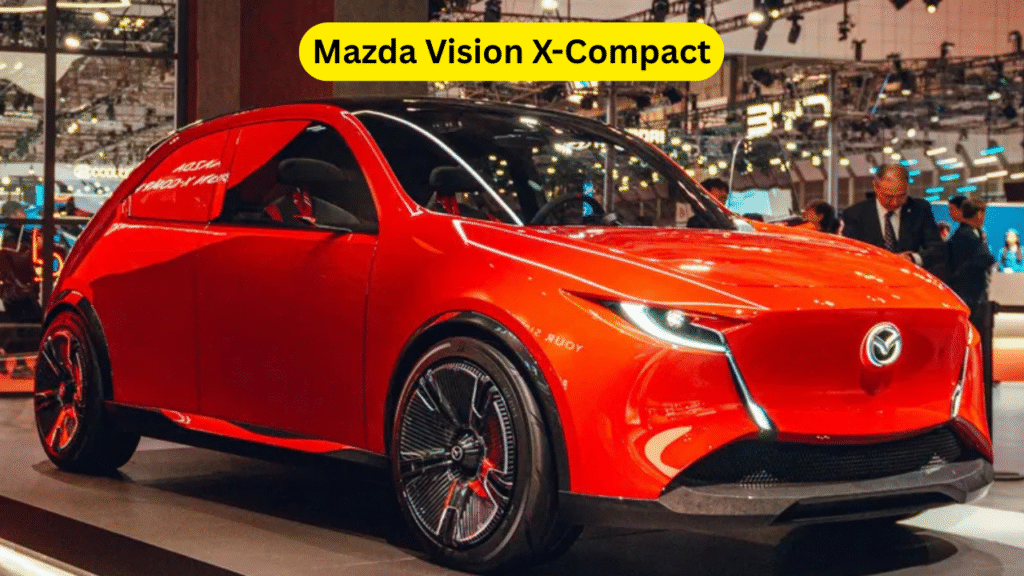

Mazda Vision X-Compact: In a world where SUVs and crossovers dominate car showrooms, small, affordable, and fun-to-drive cars have become an endangered species. The discontinuation of icons like the Ford Fiesta and the uncertain future of the Volkswagen Polo have left a void in the compact hatchback market. But from Japan, hope emerges in the form of something bright, red, and irresistibly charming—the Mazda Vision X-Compact. Mazda’s surprise concept has sparked excitement among enthusiasts who believe that small cars can still have big personalities.
Unveiled as a design and technology study, the Vision X-Compact represents Mazda’s vision of a new generation of compact vehicles that blend emotional design, driver engagement, and human-AI interaction. It’s less than four metres long, showcasing perfect supermini proportions with the kind of athletic stance Mazda has long been famous for. Many believe this concept is a strong hint at the next-generation Mazda 2, potentially filling the gap left in the small car segment after Ford and others moved away from it.
While Mazda’s description of the Vision X-Compact might sound futuristic—filled with talk of “empathetic AI” and “human sensory digital models”—the car itself is refreshingly simple and grounded. Its minimalistic interior, practical layout, and energetic styling show that Mazda understands what makes a compact car truly fun. With the right powertrain and pricing, this could be the revival of the affordable, soulful small car we’ve all been waiting for.
Mazda Vision X-Compact Specifications Overview
| Category | Details (Concept Stage) |
|---|---|
| Model | Mazda Vision X-Compact (Concept) |
| Potential Production Name | Next-generation Mazda 2 |
| Length | Under 4 metres |
| Powertrain | Not confirmed (likely petrol or hybrid) |
| Transmission | Manual or automatic (unconfirmed) |
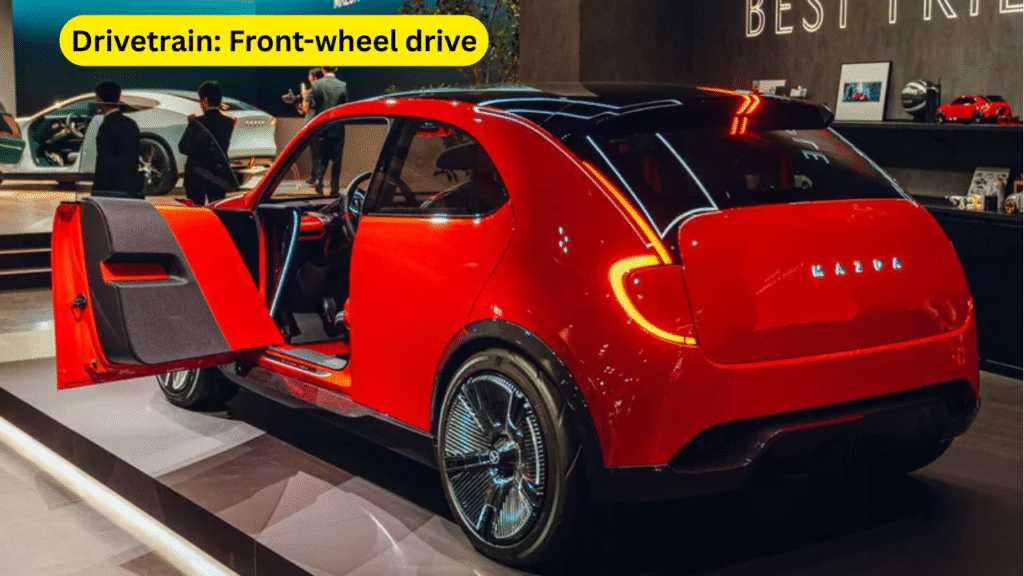
| Drivetrain | Front-wheel drive |
| Platform | Updated small-car architecture |
| Body Type | 5-door supermini |
| Display/Tech | Minimal digital gauge, built-in phone dock |
| Interior Design | Exposed body panels, simple control layout |
| AI Assistant | Empathetic AI system with natural voice conversation |
| Seating Capacity | 4–5 passengers |
| Production Status | Concept only (not yet confirmed) |
| Expected Price (if produced) | Estimated ₹8–12 lakh (UK: ~£12,000–£14,000 equivalent) |
| Unveiled | 2025 (Mazda Vision Series Concept Reveal) |
Design and Styling: Retro Charm Meets Modern Simplicity
Mazda’s Vision X-Compact is a masterclass in small-car design. Despite its compact footprint, it manages to look dynamic and confident, thanks to its short overhangs, sculpted sides, and athletic stance. The red paintwork—true to Mazda’s iconic Soul Red Crystal hue—accentuates its curves beautifully. The proportions are perfectly judged, recalling the balance and charm of classic small cars while injecting a fresh, modern spirit.
The front end is expressive yet friendly, with rounded contours and a low, smiling grille. The car looks ready to leap into motion, much like the original Mazda 2 (Demio) that won fans for its playful character. Mazda designers seem to have captured the essence of driving joy in a shape that’s approachable yet emotionally resonant—something many modern EVs lack.
Interior: Stripped-Back, Cheerful, and Cleverly Designed
Inside, the Vision X-Compact embraces utilitarian beauty. Instead of an overcomplicated dashboard filled with screens, Mazda has chosen a minimalist layout that celebrates simplicity. The cabin features exposed body-colour metalwork, a central phone holder instead of a large infotainment screen, and a single round instrument gauge—all reminiscent of classic small-car design philosophies.
This approach harks back to beloved minimalist icons like the original Ford Ka, Fiat 500, and Volkswagen Up!. By doing away with unnecessary tech clutter, Mazda makes driving feel pure again—an experience centered around connection, not distraction. The materials look durable yet cheerful, proving that cost-effective design can still feel premium when done right.
Technology and AI Companion Features
Perhaps the most futuristic element of the Vision X-Compact is its empathetic AI assistant. Mazda claims that this system can engage in natural conversation with the driver, suggest destinations, and adapt its responses based on mood and driving conditions. It’s designed to be more of a “companion” than a traditional voice assistant—creating an emotional bond between driver and machine.
While that might sound a bit sci-fi, it fits with Mazda’s long-standing philosophy of “Jinba Ittai”, or the unity between driver and car. If implemented thoughtfully, this human-AI collaboration could redefine the way we interact with small cars—making them not just tools, but trusted partners on the road.
Performance Possibilities
Mazda hasn’t revealed what powers the Vision X-Compact, but the presence of a rev counter and gear lever in the cabin suggests it may not be fully electric—at least not yet. This could point to a mild-hybrid petrol or even plug-in hybrid setup. Mazda could use its efficient Skyactiv-X engine technology or an all-new small-displacement hybrid motor designed for urban use.
Given Mazda’s focus on lightweight engineering and driving pleasure, the Vision X-Compact would likely prioritize responsiveness, agility, and driver feedback over sheer power. Whether it ends up being combustion or hybrid-powered, enthusiasts are already hopeful it maintains the signature Mazda “zoom-zoom” spirit.
Price Expectations and Market Position
If Mazda green-lights production, the Vision X-Compact could be positioned as an affordable supermini below the Mazda 3. Its target rivals would include the Toyota Yaris, Hyundai i20, Honda Jazz, and Suzuki Swift. With a competitive price tag starting around ₹8–12 lakh (approx. £12,000–£14,000), it could bring back the lost charm of small, practical hatchbacks that don’t compromise on design or engagement.
Launch Date and Availability
As of now, Mazda has not confirmed production plans for the Vision X-Compact. However, strong positive reactions from global media and fans could influence Mazda’s decision. If approved, a production version could arrive by late 2026 or early 2027, possibly under the Mazda 2 nameplate or a new “X” branding that emphasizes intelligent, compact mobility.
Other Notable Details
- Design Inspiration: Mazda’s “Human-Centric” design philosophy
- Focus Areas: Affordability, emotional connection, urban practicality
- Potential Markets: Japan, Europe, India (if localized), and emerging EV markets
- Competitors: Toyota Yaris, Suzuki Swift, Hyundai i20, Renault 5 EV (upcoming)
Also read: 2026 Nissan Elgrand Review – The JDM Luxury Minivan Makes a Triumphant Return
Conclusion
The Mazda Vision X-Compact represents everything the modern car market desperately needs but often forgets: a small, stylish, and emotionally engaging vehicle that values simplicity and driving joy over excess. In an era where cars are increasingly complex and oversized, Mazda’s concept feels like a refreshing love letter to the golden age of small cars.
If Mazda decides to bring this concept to life as the next Mazda 2, it could easily become the benchmark for affordable driving pleasure once again. The Vision X-Compact proves that innovation doesn’t have to mean losing soul—it can mean rediscovering it.
This concept also underscores Mazda’s belief that technology should serve emotion, not overshadow it. Its empathetic AI features, thoughtful design, and potential for hybrid efficiency all point toward a future where cars still make us smile, not just transport us.
Mazda has a long history of building driver-focused cars—from the legendary MX-5 Miata to the agile Mazda 2. The Vision X-Compact feels like a spiritual successor to that philosophy, scaled down for the next generation of urban drivers. For enthusiasts, it’s simple: Mazda, please make this car.
FAQs About the Mazda Vision X-Compact
1. What is the Mazda Vision X-Compact?
The Mazda Vision X-Compact is a small supermini concept car unveiled in 2025. It showcases Mazda’s design and AI technology philosophy and hints at what the next-generation Mazda 2 could look like. Compact, stylish, and smart, it’s designed to rekindle the joy of driving.
2. Is the Vision X-Compact an electric car?
Mazda hasn’t confirmed the powertrain, but interior details suggest it may feature a combustion or hybrid engine rather than a full EV setup. Future production models, however, could include electric or mild-hybrid versions based on market demand.
3. What makes the Vision X-Compact different from other small cars?
Unlike most modern superminis that focus on digital complexity, the Vision X-Compact embraces simplicity. It features minimal screens, physical controls, and an “empathetic AI” that interacts naturally with the driver—creating a unique blend of emotional and digital connection.
4. Will Mazda put the Vision X-Compact into production?
As of now, it remains a concept. However, given its strong reception, there’s speculation that Mazda may adapt it into the next-generation Mazda 2 by 2026–2027, either as a hybrid or efficient petrol-powered supermini.
5. What are the expected rivals and price range?
If it reaches production, the Vision X-Compact would compete with the Toyota Yaris, Hyundai i20, Honda Jazz, and Suzuki Swift. The estimated price could start around ₹8–12 lakh (UK: £12,000–£14,000), positioning it as an affordable, fun-to-drive compact hatchback.