
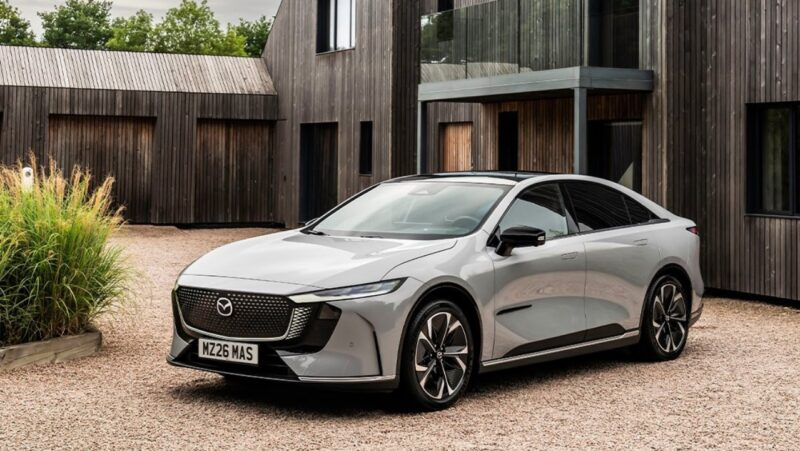
Mazda 6e: Mazda has officially introduced the Mazda 6e electric sedan in the United Kingdom, marking an important step in the brand’s electrification journey in Europe. Deliveries are expected to begin this summer, and the new EV is positioned as a stylish, mid-size electric sedan designed to compete with established players in the European market.
However, what has captured the most attention is not just the car’s specifications or design but its price difference between the UK and China. While the Mazda 6e starts at £38,995 in the UK, the same vehicle sold in China as the Mazda EZ-6 begins at just 159,800 yuan (approximately £16,900). That means UK buyers are paying more than 2.3 times the Chinese starting price for essentially the same car.
Let’s take a closer look at the vehicle itself, the pricing dynamics, and what this means for the UK EV market.
Mazda 6e – A Chinese-Developed Global EV
The Mazda 6e is not an entirely new, independently developed model. Instead, it is based on the Mazda EZ-6, which was developed in partnership with Chinese automaker Changan. The car rides on the Changan EPA electric hybrid platform, the same architecture that underpins the Deepal SL03.
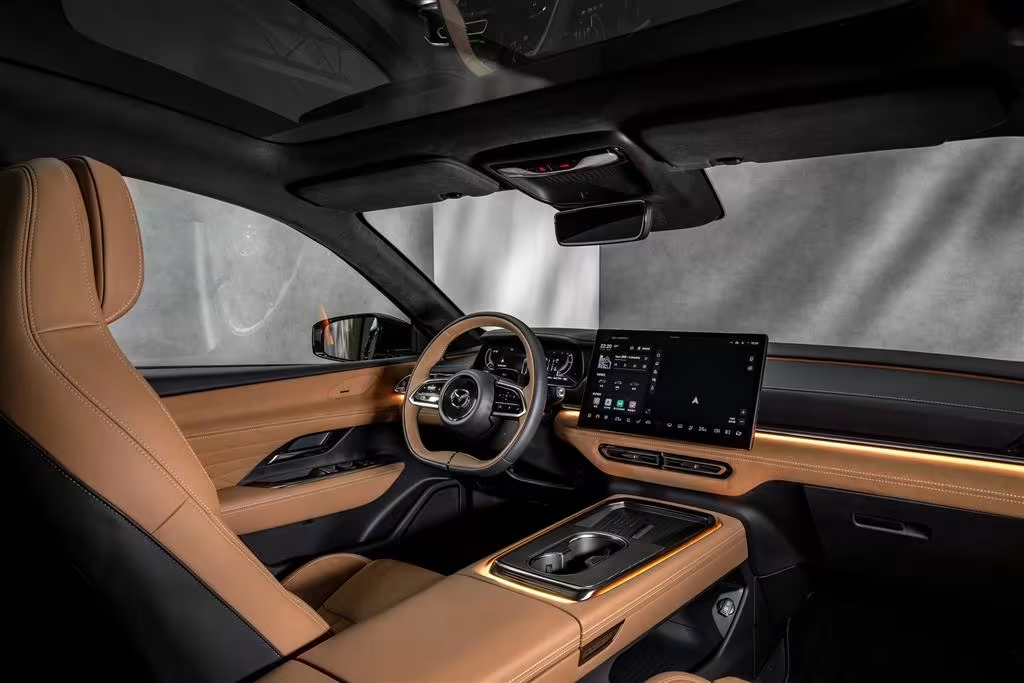
Mazda has reworked the vehicle to align with its design philosophy and brand identity, giving it a more refined and European-friendly aesthetic. However, the core structure, battery system, and drivetrain remain largely similar to the Chinese-market version.
Battery, Range and Charging Performance
The UK-spec Mazda 6e comes equipped with a 78 kWh LFP (Lithium Iron Phosphate) battery pack. This battery configuration delivers an official range of:
- 560 kilometres (348 miles)
This range places it competitively within the mid-size electric sedan segment in Europe.
Fast Charging Capability
Mazda has equipped the 6e with fast-charging technology capable of:
- Charging from 10% to 80% in approximately 24 minutes
UK Pricing
At £38,995, the Mazda 6e is priced competitively against rivals in the UK such as:
- Tesla Model 3 (base variants)
- Hyundai Ioniq 6
- Polestar 2
- BMW i4 (entry trims)
Within the UK and broader European context, this pricing appears reasonable for a well-equipped mid-size electric sedan with over 340 miles of range. However, the real debate begins when comparing it to the Chinese market price.
Factors Behind the Price Gap
Several elements may explain this large difference:
1. Domestic Pricing Advantages in China
Chinese EVs benefit from:
- Lower manufacturing costs
- Domestic supply chain integration
- Government subsidies and incentives
- High production volumes
China’s EV market is extremely competitive, which pushes manufacturers to maintain aggressive pricing.
2. Import and Logistics Costs
Although the UK has not imposed the same level of punitive tariffs as the European Union, there are still:
- Import duties
- Shipping and logistics expenses
- Compliance costs for UK safety and regulatory standards
These add to the final retail price.
3. Market Positioning Strategy
Mazda may also be pricing the 6e according to:
- Brand positioning in Europe
- Consumer willingness to pay
- Competitive landscape
In Europe and the UK, Mazda is perceived as a premium mainstream brand, allowing for higher pricing than in China.
Also read: BYD Atto 3 Evo Unveiled
Strategic Implications for Mazda
For Mazda, the 6e represents:
- A major step into the European EV sedan segment
- A bridge between Chinese development efficiency and global brand identity
- A chance to compete with Tesla and European EV brands
However, the pricing discrepancy could lead to debates about value perception, especially as more Chinese brands enter the UK market with aggressive pricing strategies.
What This Means for UK EV Buyers
The Mazda 6e offers:
- Strong range (560 km)
- Competitive fast charging
- Rear-wheel-drive dynamics
- Stylish Mazda design language
But UK consumers are becoming increasingly price-aware. As more direct Chinese brands enter the market at lower price points, traditional brands rebadging Chinese-developed cars may face greater scrutiny.